Did you know that the Chainsaw Man: Reze Arc movie contains one of the biggest pieces of foreshadowing from Part 1?
There is a small, almost throwaway moment where Makima explains why Beam, the Shark Fiend, obeys Denji so faithfully.
Her answer is:
“Maybe Because you look so similar.”
At first glance this line seems silly, even wrong. But in reality, this brief sentence foreshadows one of the most important revelations in Chainsaw Man Part 1.
This article explains why Makima says this, and how the line becomes a crucial setup for the final confrontation.
Spoilers for Part 1 ahead.
Chainsaw Man Part 1 Recap & Guide – Story, Arcs, Characters and Themes Explained
Do Denji and Beam Actually Look Alike?
The short answer: absolutely not.
- Denji: a normal human-looking boy
- Beam: partially fused with a shark’s head, complete with dorsal fin and jagged maw
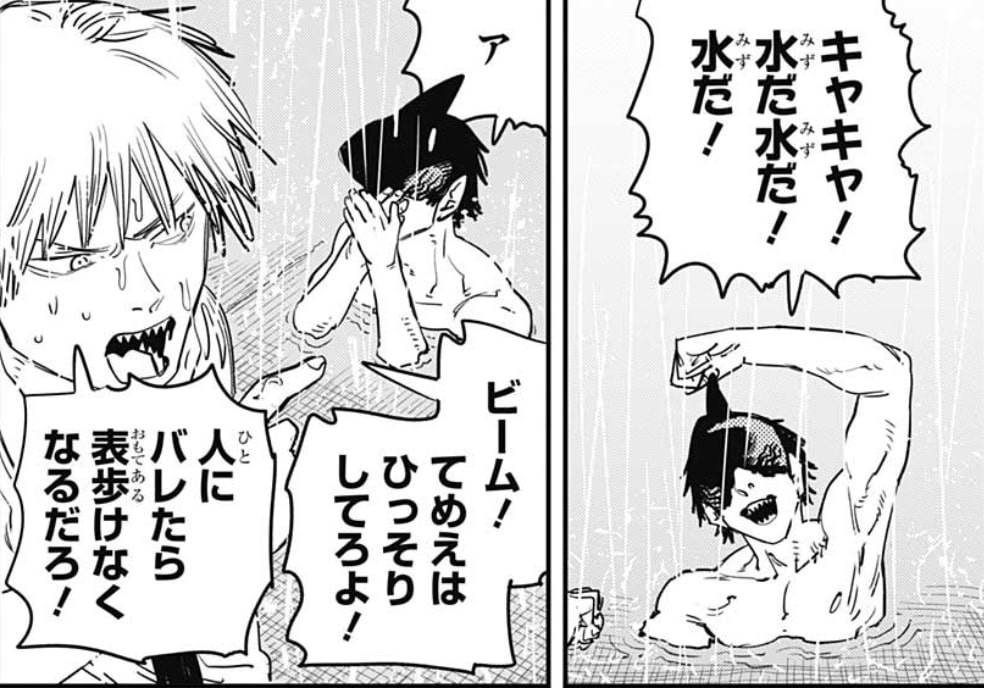
The two characters share almost no visual similarity. At best, you could say both have sharp teeth—but that alone hardly explains Beam’s absolute loyalty.
So why would Makima say something that is obviously untrue?
Beam (Shark Fiend) — Profile, Abilities, and Loyalty to Chainsaw Man
The Real Reasons Behind Makima’s Statement
1. Makima cannot identify people by their faces
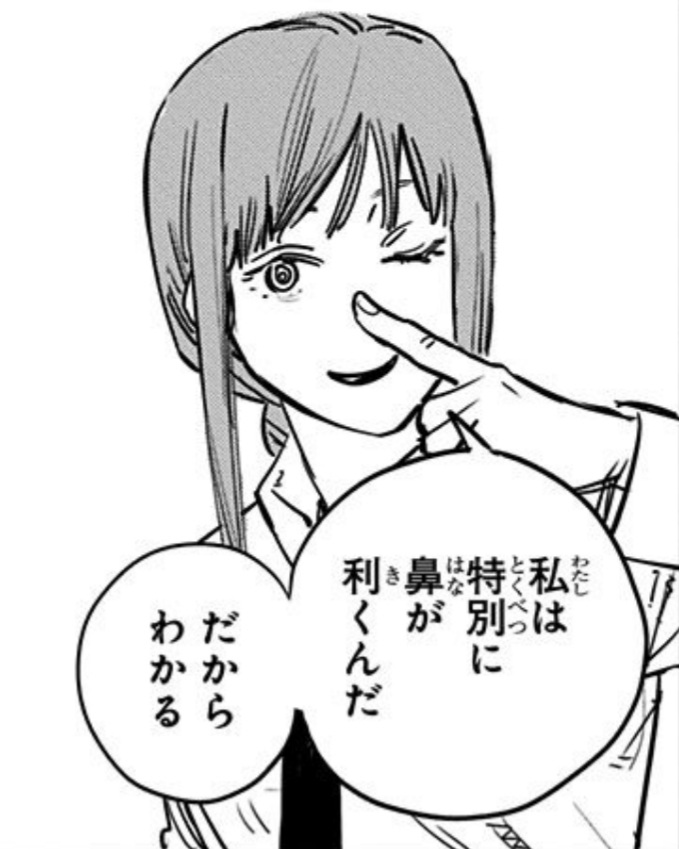
Makima does not rely on eyesight to recognize individuals.
She identifies humans by scent, just like a dog.
Because she doesn’t distinguish people by their facial features, saying “they look alike” has no real meaning for her. It is simply a convenient excuse.
2. Makima wants to hide the real truth from Denji
The true reason Beam obeys Denji is simple:
Beam is a vassal of the real Chainsaw Man.
He recognizes Denji as the host of Pochita—the Chainsaw Devil—so he naturally follows him.
Makima knows this completely. But she has no intention of telling Denji the truth or letting him realize the depth of his connection to Chainsaw Man’s mythology.
Thus she gives an intentionally shallow explanation:
“Maybe Because you look so similar.”
3. Makima believes Denji will accept any explanation
Makima’s interest is not in Denji as a person. Her sole target is Pochita, living inside him.
Therefore she underestimates Denji’s intelligence and assumes he won’t question her.
A flimsy excuse is more than enough—at least from her perspective.
Makima Explained: The True Identity, Powers, and Death of the Control Devil in Chainsaw Man
Why This Becomes Major Foreshadowing
Near the end of Part 1, Denji finally discovers Makima’s true weakness.
Makima recognizes people only by their scent
Denji pieces this together from various interactions, including her strange comment about Beam and his “similar face.”
This understanding becomes one of the keys that allows Denji to devise a plan to defeat Makima.
Makima only remembers the scent of people she cares about
In theory, Makima should easily identify Denji by smell.
But Denji realizes something devastating:
“Makima doesn’t care about me. She hasn’t memorized my scent.”
He gambles everything on this assumption—and he is right.
Because Makima is blind to Denji himself and only sees the Chainsaw Man inside him, Denji manages to deceive her and ultimately kill her.
And that long chain of events ties directly back to one seemingly insignificant line:
“Maybe Because you look so similar.”
This moment is not a joke or a random mistake.
It is deliberate foreshadowing of the fundamental flaw in Makima’s perception—
the flaw that brings about her defeat.
Conclusion: A Single Line That Shapes the Entire Ending of Part 1
Makima’s seemingly nonsensical claim carries layers of hidden meaning:
- She cannot identify humans by face
- She intentionally hides Beam’s true loyalty
- She underestimates Denji
- Her comment hints at her reliance on scent, setting up her downfall
- It foreshadows the logic behind Denji’s final strategy
In retrospect, this one short sentence is one of the most important pieces of foreshadowing in all of Part 1.

コメント